 Cowinmagnet
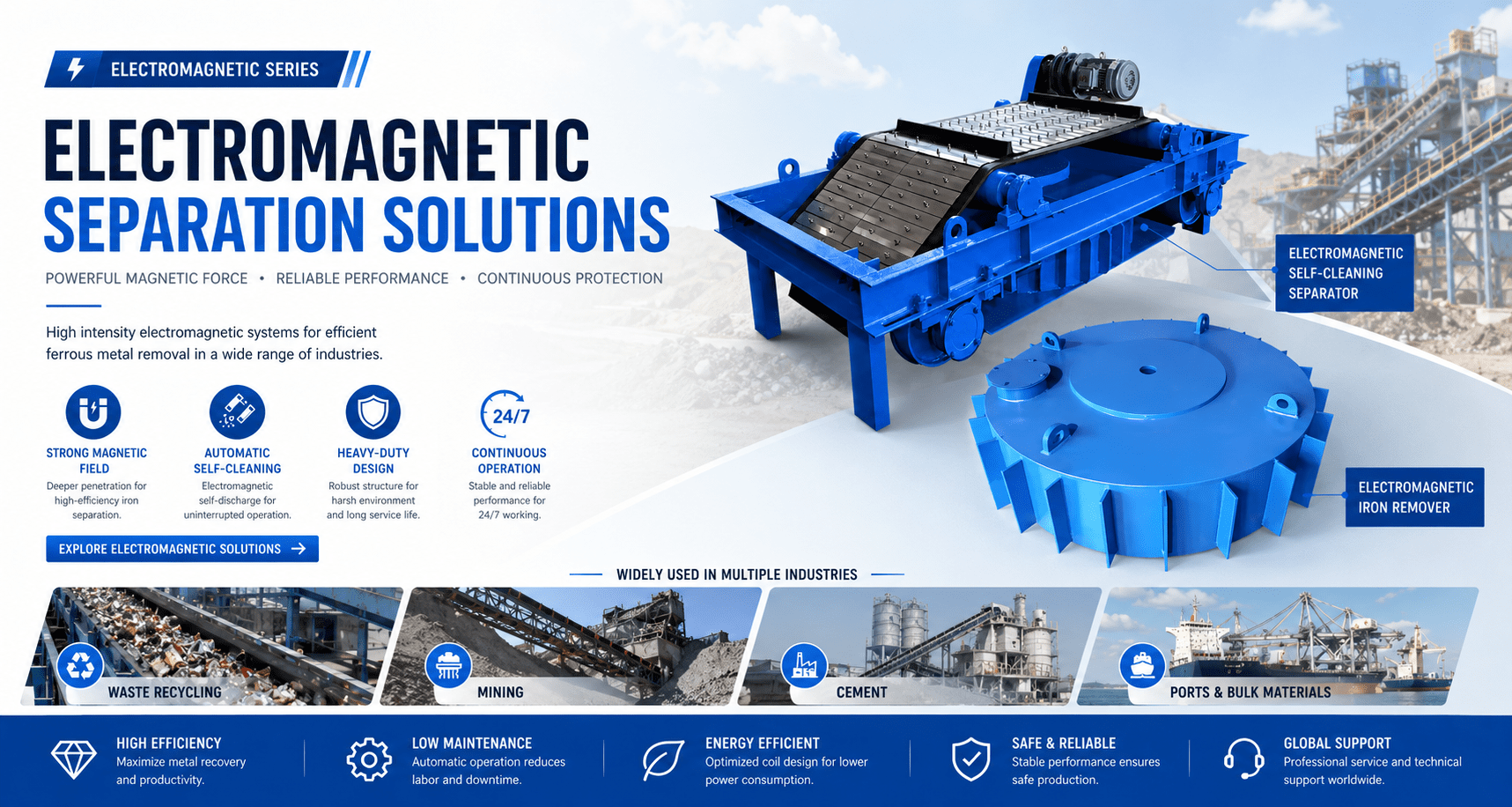
When selecting a self-cleaning magnetic separator for your industrial process, it's essential to consider several key factors to ensure optimal performance and efficiency. This article will guide you through the critical selection criteria, focusing on the specific needs of industries such as mining, recycling, and cement production. We will discuss how to choose the right self-cleaning magnetic separator based on your material being processed, process purpose, and operating conditions.
Understanding the Process Purpose and Material Being Processed
The primary function of a self-cleaning magnetic separator is to remove ferrous contaminants from the material stream, protecting downstream equipment and improving product quality. The type of material being processed, such as minerals, recycled materials, or bulk solids, will influence the choice of the magnetic separator. For instance, in the mining industry, the separator must handle large volumes of abrasive materials, while in recycling, it needs to efficiently separate ferrous metals from non-ferrous waste.
Key Considerations:
Material Type: Determine the nature of the material (e.g., wet, dry, sticky, abrasive).
Particle Size: Assess the size distribution of the particles in the material stream.
Flow Rate: Measure the volume of material passing through the separator per unit time.
Contaminant Type: Identify the types and sizes of ferrous contaminants present.
Operating Conditions and Environmental Factors
Operating conditions play a crucial role in the selection of a self-cleaning magnetic separator. These include environmental factors such as temperature, humidity, and dust levels, as well as the physical layout of the plant.
Key Considerations:
Temperature: Ensure the separator can operate within the required temperature range. High-temperature designs are available for processes involving hot materials.
Humidity and Dust: Select a separator with appropriate sealing and protection to withstand high humidity and dusty environments.
Installation Space: Consider the available space for installation and maintenance. Compact designs may be necessary for limited spaces.
Power Supply: Verify that the power supply meets the requirements of the electromagnetic system, if applicable.
Technical Specifications and Performance Data
Technical specifications and performance data are critical for ensuring that the selected self-cleaning magnetic separator meets the process requirements. Key technical aspects include magnetic field strength, belt speed, and discharge mechanisms.
Key Considerations:
Magnetic Field Strength: Choose a separator with sufficient magnetic field strength to capture all ferrous contaminants. Cowinmagnet's separators are designed with high-performance rare earth and ferrite magnetic materials to ensure strong and stable magnetic force.
Belt Speed: The belt speed should be optimized to balance separation efficiency and throughput. Automatic iron discharge systems can enhance continuous operation.
Discharge Mechanism: Ensure the separator has an efficient self-cleaning mechanism to prevent clogging and maintain consistent performance.
Parameter Cowinmagnet Self-Cleaning Magnetic Separator
Magnetic Material Rare Earth and Ferrite
Belt Speed Adjustable up to 1.5 m/s
Temperature Range Up to 200°C
Sealing Dustproof and Waterproof
Cowinmagnet's Capabilities in Self-Cleaning Magnetic Separation
Cowinmagnet provides a full range of industrial magnetic separation solutions, including self-cleaning magnetic separators. Our products are designed to meet the stringent demands of various industries, ensuring reliable and efficient performance.
Key Features:
High Magnetic Field Intensity: Ensures effective removal of ferrous contaminants.
Stable Performance in Harsh Environments: Designed for continuous operation in challenging conditions.
Low Maintenance Cost: Durable construction and self-cleaning mechanisms reduce downtime and maintenance.
Customizable Design: Tailored solutions to fit specific production lines and process requirements.
For more information on our product portfolio and customization options, visit our product page.
Frequently Asked Questions
What is the main advantage of a self-cleaning magnetic separator?
A self-cleaning magnetic separator offers continuous operation by automatically removing captured ferrous contaminants, reducing the need for manual cleaning and minimizing downtime.
Can self-cleaning magnetic separators be used in high-temperature applications?
Yes, self-cleaning magnetic separators can be designed for high-temperature applications. Cowinmagnet's separators can operate in temperatures up to 200°C, making them suitable for processes involving hot materials.
How do I determine the appropriate belt speed for my application?
The appropriate belt speed depends on the material flow rate and the size and type of contaminants. It should be optimized to ensure efficient separation without compromising throughput. Consult with a Cowinmagnet technical expert for specific recommendations.
Optimize Your Industrial Process with the Right Self-Cleaning Magnetic Separator
Choosing the right self-cleaning magnetic separator is crucial for protecting your equipment, improving product quality, and enhancing overall process efficiency. By considering the process purpose, material being processed, operating conditions, and technical specifications, you can select a solution that meets your specific needs. For further assistance and to discuss your project requirements, please contact us.